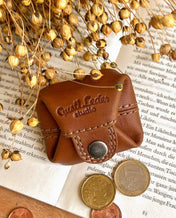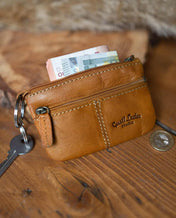
Leather dyeing is a crucial stage in leather production that defines the material’s colour, visual appeal, and long-term durability. Rather than being applied in a single step, colour develops gradually throughout different phases of processing—starting during tanning and continuing with advanced dyeing and finishing techniques.
The way leather is dyed directly influences not only how it looks but also how it ages, feels, and performs over time. From deep, natural tones to vibrant, uniform finishes, each method plays a specific role in achieving the desired result.
In this article, you will learn how leather gets its colour, the difference between through-dyeing and pigmentation, and how these techniques impact the final product.

🔍 Introduction – How is leather dyed?
Leather begins to take on colour during the tanning process. The type of tanning used significantly affects the base tone of the material:
-
Vegetable tanning typically produces warm, natural brown shades
-
Chrome tanning often results in cooler bluish-grey tones
If additional or more vibrant colours are required, the leather undergoes further dyeing after tanning. This can be done in two main ways: either by fully saturating the leather so the dye penetrates deeply, or by applying colour to the surface.
In many cases, manufacturers combine both techniques to achieve a balance of depth, consistency, and durability.

❓ FAQs about leather dyeing
🔹 What is through-dyeing (drum dyeing)?
Through-dyeing, also known as drum dyeing, involves immersing leather in large rotating drums filled with dye. This allows the colour to penetrate deeply into the fibres of the material.
High-quality through-dyed leather can be identified by its consistent colour on both the front and back sides. This method not only enhances colour richness but also helps reduce the visibility of scratches, as the underlying material remains the same colour.
🔹 What is pigmentation in leather dyeing?
Pigmentation is a finishing step applied after dyeing. In this process, a layer of colour is sprayed onto the surface of the leather, followed by a protective top coat.
This coating helps:
-
Seal the colour
-
Improve consistency
-
Add a slight sheen
-
Increase resistance to wear, fading, and stains
Pigmented leather is widely used in products that require durability and easy maintenance.
🔹 Why is leather dyed in multiple steps?
Leather is often dyed in multiple stages to combine the benefits of different techniques.
Through-dyeing ensures deep colour penetration and a natural look, while pigmentation enhances surface durability and uniformity. Together, these steps create leather that is both visually appealing and resistant to everyday wear.
🔹 Does dyeing affect leather quality?
Yes, the dyeing method has a direct impact on the quality and performance of leather.
-
Through-dyed leather is typically softer, more breathable, and develops a natural patina over time
-
Pigmented leather is more durable, uniform in appearance, and easier to maintain
The ideal choice depends on the intended use of the leather product.
🔹 Can leather dye rub off or transfer onto clothing?
Yes, leather dye can sometimes transfer onto clothing, particularly if the leather is newly dyed, exposed to moisture, or lacks a proper protective finish. This is more likely with deeply dyed or insufficiently sealed leather.
Tip to prevent colour transfer:
To minimise the risk, ensure the leather has a proper protective top coat and avoid contact with light-coloured fabrics when the item is new or damp. Regular conditioning also helps stabilise the dye and maintain the finish over time.
👉 For more details on handling and preventing stains, read our guide on leather staining.
✅ Final thoughts on leather dyeing
Leather dyeing is a multi-step process that begins during tanning and continues with techniques such as through-dyeing and pigmentation. Each stage plays a vital role in determining the leather’s final colour, texture, and durability.
Understanding how these processes work allows you to make more informed decisions when choosing leather products—ensuring they meet your expectations in terms of appearance, performance, and longevity.
Additional sources (accessed: 15.04.2026)
- leder-info(punkt)de/index.php/lederfarben
- lederzentrum(dot)de/wiki/index.php/F%C3%A4rben
- oeko-fair(dot)de/index.php/cat/1480/title/Faerbung
- leder-info(dot)de/index.php/Zurichtung